Sump Pump Failure Cleanup in Sterling Heights, MI
When the pump quits or the power drops in a thunderstorm, the pit fills and the basement follows. The extraction crew pulls the water, and the drying team dries the slab, walls and finished rooms to readings.
(888) 612-9219Get sump pump failure cleanup started in Sterling Heights- Category set at the pit
- Truck-mounted extraction
- 24/7 dispatch
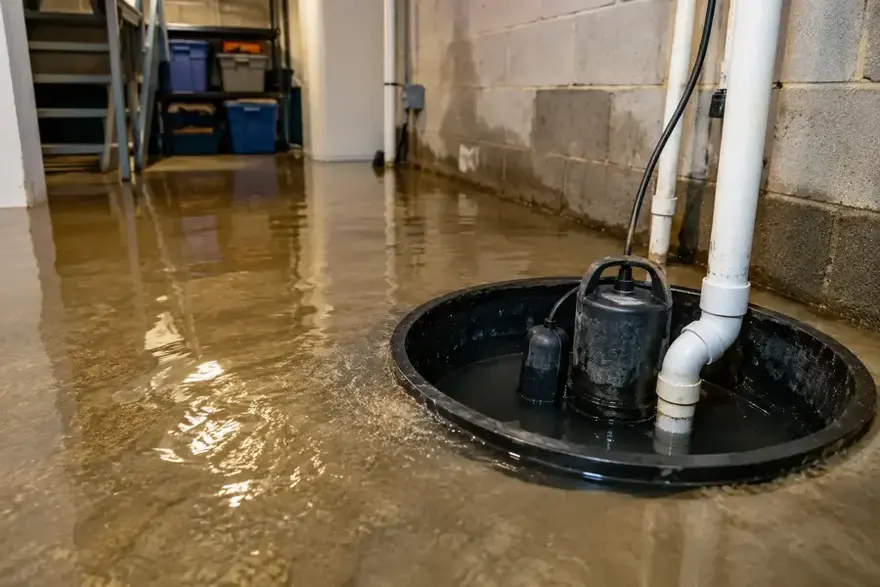
What to do first about sump pump failure cleanup in Sterling Heights
- 1
Check the power
If the outlet or breaker is off and the area is dry, restore power to the pump.
- 2
Stay clear of the pit
Do not reach into a flooded pit with the pump plugged in.
- 3
Move what you can
Lift boxes, rugs and electronics off the wet floor.
- 4
Call for extraction
Photograph the pit and the floor, then call.
What does sump pump failure cleanup cost in Sterling Heights, MI?
In Sterling Heights, MI, sump pump failure cleanup typically runs $1,500 to $10,000. The drivers are how deep the water got, how much of the basement is finished, the materials that wicked water and how fast drying started.
Unfinished floor
$1,500 to $3,500
- Temporary pumping and extraction
- Slab drying
- Moisture readings
Partly finished
$3,500 to $6,500
- Carpet pad out
- Flood cuts where needed
- Wall cavity drying
Fully finished basement
$6,500 to $10,000+
- Wide material removal
- Antimicrobial treatment
- Full structural drying
Ranges move with the water category, the square footage, the material class and how fast drying started. For a planning number, try the Sterling Heights water damage cost calculator.
In Sterling Heights the sump pit is busy. Footing drains around the foundation carry groundwater to the pit, and the flat clay around the house keeps them full through wet months. A pump that stops for even part of a storm can put inches of water across a finished basement.
Why sump pumps fail here
- Power outages during summer thunderstorms, when the pump is needed most
- Pumps at the end of their service life, often 7 to 10 years
- Float switches that stick against the pit wall or the power cord
- Frozen or clogged discharge lines in winter
- A pump too small for the flow a clay lot sends it in spring
How the cleanup works
The first job is to stop the water. If the pump is dead, the extraction crew sets a temporary pump in the pit, then pulls standing water from the floor with truck-mounted extraction. The tech who does the walkthrough maps how far the water traveled under walls, paneling and carpet.
Water that rose out of a sump pit is groundwater that has moved through soil and drain tile, so most crews treat it as Category 2. Carpet pad comes out, carpet is judged by how long it sat, and drywall is flood cut where it wicked water. Then air movers and LGR dehumidifiers go in, set to each room's evaporation load.
Trade fact: the drying goal is a wet material reading within 2 to 4 points of the same material in a dry part of the house, and a basement slab is often the last thing to get there.
Preventing the next one
Once the basement is dry, a plumber can replace the pump, add a battery backup or a water-powered backup, and install a high-water alarm. The Sump Pump Readiness Check scores a pit in a few questions. Ready.gov power outage advice and National Weather Service flood safety explain the storm side of the problem.
How sump pump failure cleanup is handled in Sterling Heights, MI
Every step follows the IICRC S500 drying standard, and each one leaves a record for the claim file.
- 1
Map the moisture
The tech who does the walkthrough maps moisture with pinless meters and thermal imaging before any equipment goes down, and sets the category and class of the loss.
- 2
Extract
The extraction crew pulls standing water with truck-mounted extraction, so it leaves the house instead of soaking further into slab, carpet pad and bottom plates.
- 3
Dry the structure
The drying team sets air movers to each room's evaporation load and runs LGR dehumidifiers, or desiccants for Class 4 materials like concrete block and hardwood.
- 4
Verify dry
Most crews pull equipment only when wet materials read within 2 to 4 points of a dry reference in the same house, with daily readings logged for the claim file.
Where the Sterling Heights sump pump failure cleanup crew works
The Sterling Heights restoration crew covers the whole city, from the Warren border at 14 Mile north to Hall Road, and from Dequindre east to the Clinton River and Dodge Park, plus the Macomb County towns around it.
See every side of town and ZIP codeSump Pump Failure Cleanup questions in Sterling Heights
Short answers to what Sterling Heights homeowners ask most about sump pump failure cleanup.
Is sump pump failure covered by insurance?
Many Michigan policies need a water backup or sump overflow endorsement to cover it. Coverage depends on your policy, so it is worth checking with your own insurer.
Is water from a sump pit clean?
Usually not. It is groundwater that moved through soil and drain tile, so most crews treat it as Category 2 and remove soaked carpet pad.
How long does a sump pump last?
Many run 7 to 10 years, less in a pit that cycles constantly. Clay lots in Sterling Heights keep many pits working hard.
What backup options exist?
A battery backup pump, a water-powered backup where the water supply allows it, and a high-water alarm. A plumber can size them to the pit.
Why did the pump fail when it was running fine?
Float switches jam, check valves fail and discharge lines freeze or clog. A pump can also be overwhelmed by the flow in a heavy storm.
How fast does the basement need to be dried?
Within 24 to 48 hours matters, because mold can start growing in that window on wet drywall and carpet.
Sump Pump Failure Cleanup in Sterling Heights? Get the drying started today.
Every hour water sits pushes it deeper into carpet pad, drywall and the slab. The Sterling Heights restoration team works around the clock.