Sewer Backup Cleanup in Sterling Heights, MI
Sewage coming up a basement floor drain is Category 3 the moment it happens. The mitigation team sets containment, removes what the water touched and treats the area before any drying starts.
(888) 612-9219Get sewer backup cleanup started in Sterling Heights- Category 3 protocol
- Containment and HEPA
- 24/7 dispatch
What to do first about sewer backup cleanup in Sterling Heights
- 1
Stop using water
Do not flush, shower or run the washer; every gallon adds to the backup.
- 2
Keep people out
Keep children, pets and anyone with health issues away from the basement.
- 3
Skip the bleach and mop
Contaminated materials need removal, not wiping.
- 4
Photograph, then call
Photograph the drain and the water line on the walls, then call.
What does sewer backup cleanup cost in Sterling Heights, MI?
In Sterling Heights, MI, sewer backup cleanup typically runs $2,500 to $6,000 for a small backup around a floor drain and $6,000 to $15,000 or more when sewage spread across a finished basement. Plumbing repair is separate.
Small, contained backup
$2,500 to $6,000
- Containment and PPE
- Flooring and baseboard out
- Antimicrobial treatment
Finished basement
$6,000 to $10,000
- Drywall cut above the line
- Carpet, pad and insulation out
- HEPA air scrubbing
Large or repeat backup
$10,000 to $15,000+
- Wide material removal
- Contents cleaned or discarded
- Full structural drying
Ranges move with the water category, the square footage, the material class and how fast drying started. For a planning number, try the Sterling Heights water damage cost calculator.
A sewer backup is not a leak with a bad smell. It carries bacteria and viruses, and anything porous it touches stays contaminated. The IICRC S500 standard puts it in Category 3 from the first minute, however little of it there is.
Why sewers back up into Sterling Heights basements
Most homes here have a floor drain in the basement, and it is the lowest opening on the sewer. When a storm dumps more water than the system can carry, the pressure comes back up through that drain. The August 11, 2014 storm sent sewer water into basements across Sterling Heights, Warren and the rest of Macomb County.
- Heavy rain that surcharges the public sewer
- Tree roots, grease and wipes blocking the lateral to the street
- Older cast iron and clay pipe that has settled or cracked
- Floor drains with no backwater valve
How a sewer backup is cleaned up
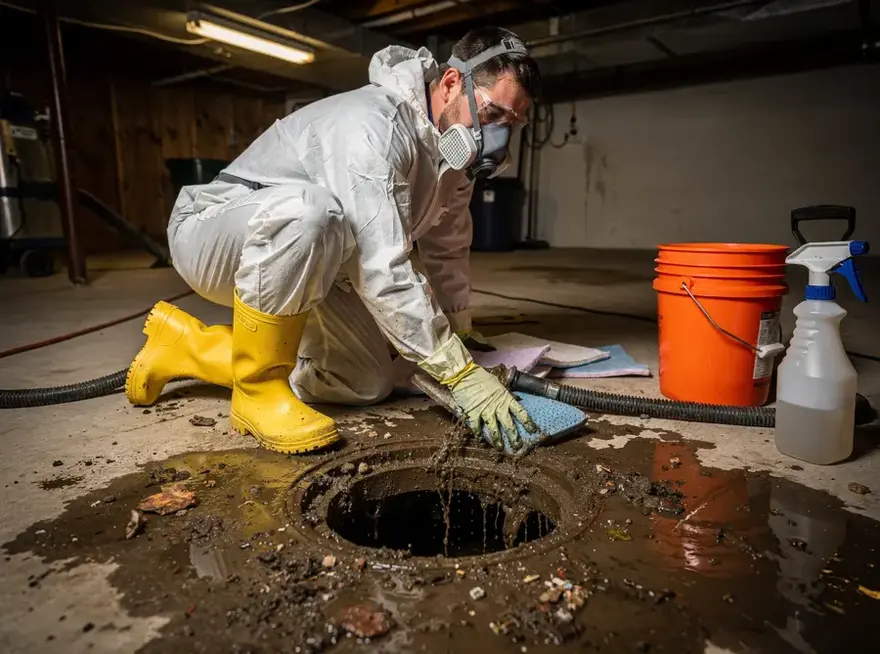
The mitigation team isolates the area with plastic containment and runs HEPA air scrubbers so contamination does not travel upstairs. Crews wear gloves, eye protection, respirators and protective suits. The extraction crew removes the sewage, then carpet, pad, the lower drywall, insulation and other porous materials come out and are bagged.
Hard surfaces are cleaned and treated with an EPA-registered antimicrobial, left for its full dwell time, before air movers and LGR dehumidifiers go in to dry the slab and framing.
Trade fact: porous materials touched by Category 3 water get removed, not dried. Drywall is typically cut above the highest contamination line so the cavity can be cleaned.
After the cleanup
A plumber should camera the lateral and consider a backwater valve on the floor drain before the room is rebuilt. The EPA page on sanitary sewer overflows explains how public systems back up, and OSHA flood cleanup pages cover the protective gear this work calls for. See basement flooding cleanup for clean water losses.
How sewer backup cleanup is handled in Sterling Heights, MI
Every step follows the IICRC S500 drying standard, and each one leaves a record for the claim file.
- 1
Map the moisture
The tech who does the walkthrough maps moisture with pinless meters and thermal imaging before any equipment goes down, and sets the category and class of the loss.
- 2
Extract
The extraction crew pulls standing water with truck-mounted extraction, so it leaves the house instead of soaking further into slab, carpet pad and bottom plates.
- 3
Dry the structure
The drying team sets air movers to each room's evaporation load and runs LGR dehumidifiers, or desiccants for Class 4 materials like concrete block and hardwood.
- 4
Verify dry
Most crews pull equipment only when wet materials read within 2 to 4 points of a dry reference in the same house, with daily readings logged for the claim file.
Where the Sterling Heights sewer backup cleanup crew works
The Sterling Heights restoration crew covers the whole city, from the Warren border at 14 Mile north to Hall Road, and from Dequindre east to the Clinton River and Dodge Park, plus the Macomb County towns around it.
See every side of town and ZIP codeSewer Backup Cleanup questions in Sterling Heights
Short answers to what Sterling Heights homeowners ask most about sewer backup cleanup.
Is it safe to clean a small sewer backup myself?
It is not recommended. Sewage is Category 3 water. Porous materials need removal, and the area needs containment and an EPA-registered antimicrobial.
Is a sewer backup covered by homeowners insurance?
Many policies exclude it unless a sewer or water backup endorsement was added. Coverage depends on your policy, so it is worth checking with your own insurer.
Can carpet be cleaned after a sewer backup?
No. Carpet and pad touched by sewage are removed and discarded.
How high is drywall cut after a backup?
Above the highest contamination line, often 2 feet or more, so the cavity can be cleaned, treated and dried.
Why did the drain back up during a storm?
Heavy rain can overload the sewer system, and the pressure comes back up through the lowest opening in the house, which is usually the basement floor drain.
How can I prevent the next backup?
A backwater valve on the floor drain, a camera inspection of the lateral, and keeping grease and wipes out of the line.
Sewer Backup Cleanup in Sterling Heights? Get the drying started today.
Every hour water sits pushes it deeper into carpet pad, drywall and the slab. The Sterling Heights restoration team works around the clock.