Basement Wall Seepage Water Damage in Sterling Heights, MI
Seepage is slow, so it hides. Groundwater comes through a crack or the cove joint, runs behind paneling and wicks up drywall for days. The drying team finds it with meters and thermal imaging and dries the wall, not just the floor.
(888) 612-9219Get basement wall seepage damage started in Sterling Heights- Thermal imaging
- Desiccant drying for block
- 24/7 dispatch
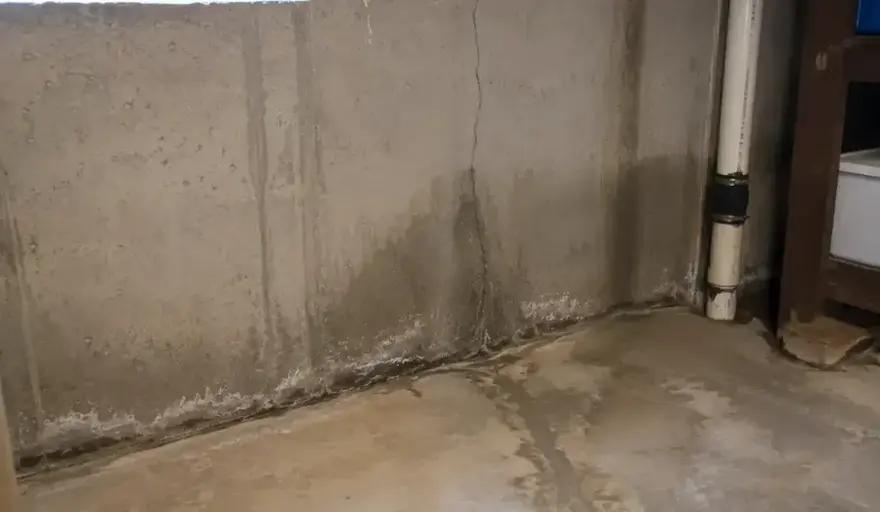
What to do first about basement wall seepage damage in Sterling Heights
- 1
Look behind things
Pull boxes and furniture back from the wall to see how far the water went.
- 2
Feel the carpet edge
Check the carpet along the wall for dampness.
- 3
Photograph the stain
Photograph stains and the crack or joint where water appears.
- 4
Call before it spreads
Seepage keeps wicking; call before it reaches more framing.
What does basement wall seepage water damage cost in Sterling Heights, MI?
In Sterling Heights, MI, basement wall seepage water damage typically runs $800 to $5,000 for the mitigation, depending on how much finished wall and flooring got wet and whether the walls are block or poured. Foundation repair is separate.
Unfinished wall
$800 to $1,800
- Moisture mapping
- Targeted wall drying
- Daily readings
Finished wall section
$1,800 to $3,500
- Paneling or drywall off
- Insulation out
- Bottom plate drying
Several walls
$3,500 to $5,000+
- Wide material removal
- Desiccant drying on block
- Carpet and pad decisions
Ranges move with the water category, the square footage, the material class and how fast drying started. For a planning number, try the Sterling Heights water damage cost calculator.
Wall seepage is different from a flood. There is rarely standing water, just a damp carpet edge, a stain on the paneling or a musty smell. By the time it shows, water has often been wicking into drywall and the bottom plate of the framed wall for a while.
Why walls seep in Sterling Heights
Sterling Heights sits on flat glacial lake-plain clay. Clay holds water against the foundation instead of letting it drain, and when the soil is saturated, hydrostatic pressure pushes water through any gap.
- The cove joint, where the wall meets the floor slab
- Shrinkage cracks in poured concrete walls
- Mortar joints and hollow cores in concrete block walls
- Form tie holes and pipe penetrations
- Downspouts and grading that dump roof water against the foundation
How seepage damage is handled
The tech who does the walkthrough scans the finished walls with a thermal camera and pinless meters to find where the water is running, then confirms with pin readings. Paneling or drywall over the wet area comes off along with wet insulation, because water trapped between a finished wall and concrete will not dry in place.
The drying team then dries the exposed wall and framing. Concrete block holds a lot of water in its cores, so crews often use desiccant dehumidifiers or targeted air on block walls. Readings are logged daily until the wall reaches the drying goal.
Trade fact: finishing a basement over a wall that still seeps traps water behind the drywall. The seepage source gets fixed before anything is rebuilt.
Fixing the source
Common fixes are crack injection, extending downspouts, regrading, and interior drain tile to the sump. EPA advice on moisture in the home explains how water moves into basements, and EPA indoor air quality pages cover damp basement air. Where seepage floods the floor, see basement flooding cleanup.
How basement wall seepage damage is handled in Sterling Heights, MI
Every step follows the IICRC S500 drying standard, and each one leaves a record for the claim file.
- 1
Map the moisture
The tech who does the walkthrough maps moisture with pinless meters and thermal imaging before any equipment goes down, and sets the category and class of the loss.
- 2
Extract
The extraction crew pulls standing water with truck-mounted extraction, so it leaves the house instead of soaking further into slab, carpet pad and bottom plates.
- 3
Dry the structure
The drying team sets air movers to each room's evaporation load and runs LGR dehumidifiers, or desiccants for Class 4 materials like concrete block and hardwood.
- 4
Verify dry
Most crews pull equipment only when wet materials read within 2 to 4 points of a dry reference in the same house, with daily readings logged for the claim file.
Where the Sterling Heights basement wall seepage damage crew works
The Sterling Heights restoration crew covers the whole city, from the Warren border at 14 Mile north to Hall Road, and from Dequindre east to the Clinton River and Dodge Park, plus the Macomb County towns around it.
See every side of town and ZIP codeBasement Wall Seepage Water Damage questions in Sterling Heights
Short answers to what Sterling Heights homeowners ask most about basement wall seepage damage.
How do I know if water is coming through the wall?
Damp carpet along the wall, stains or peeling paint low on the wall, a white chalky residue on concrete, and a musty smell are the usual signs.
Can seepage damage be dried without removing drywall?
Rarely. Water between drywall and concrete has nowhere to go, so the wet section usually comes off.
Does insurance cover wall seepage?
Seepage and groundwater are often excluded or limited. Coverage depends on your policy, so it is worth checking with your own insurer.
Why is block harder to dry than poured concrete?
Block has hollow cores that hold water, and it takes longer to release it. Desiccant dehumidifiers help with Class 4 materials like this.
What is the white powder on my basement wall?
It is efflorescence, mineral salts left behind when water moves through concrete and evaporates. It is a sign of seepage.
Should I seal the wall from the inside?
Interior coatings can help with damp walls, but they do not stop water under pressure. The source, like grading or a crack, usually needs repair.
Basement Wall Seepage Water Damage in Sterling Heights? Get the drying started today.
Every hour water sits pushes it deeper into carpet pad, drywall and the slab. The Sterling Heights restoration team works around the clock.